

Chief justices: State courts are built to withstand the toughest challenges
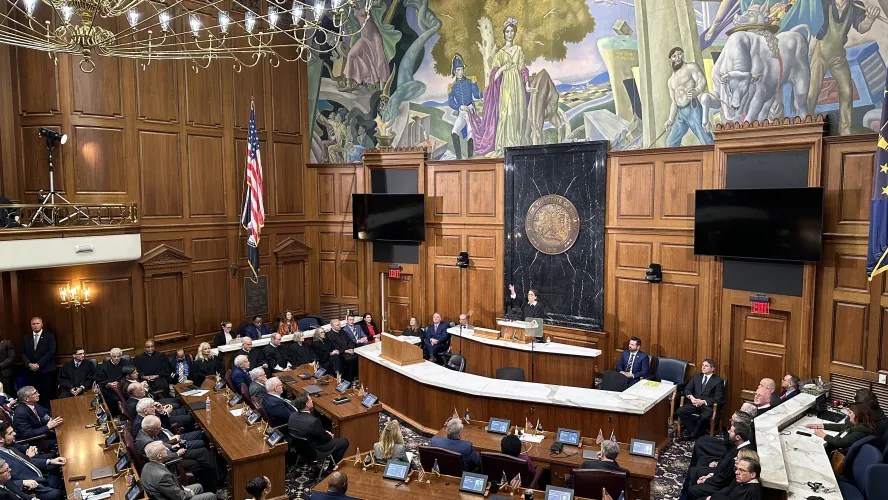
Indiana Chief Justice Loretta H. Rush addresses the governor and a joint session of the Indiana General Assembly during the State of the Judiciary address on Jan. 14, 2026. (Photo credit: Erin Saxena, Indiana Supreme Court, Office of Communication, Education, Outreach.)
Many state chief justices deliver a "state of the judiciary" message in the early part of each year. Such messages are usually delivered in person, and usually to the state's legislative body, though there are some exceptions. Some may be delivered in writing or, occasionally, via YouTube.
Our review of more than a dozen recent state of the judiciary messages finds commonalities in these remarks, which we discuss below. While each state faces unique challenges, several clear national themes emerge: courts are operating in an increasingly complex, high-pressure environment, yet remain committed to fairness, accessibility, and the rule of law.
Judicial independence: Free, to be fair
Many chief justices are sounding a sustained warning about mounting pressures on judicial independence. Many describe a climate in which courts are facing heightened criticism, politicization, and, in some instances, direct hostility. The concern is not simply about disagreement with court decisions — which is expected in a healthy democracy — but about a broader erosion of respect for the role of the judiciary as a coequal branch of government.
The state of our judiciary will remain strong only so long as we remain committed to the rule of law.
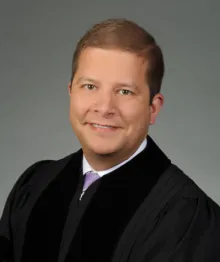
Chief Justice Nels S.D. Peterson
Georgia Supreme Court

Too much to do, too few people to do it
Caseload pressures remain a persistent challenge. Courts are continuing to manage large volumes of cases while striving to reduce backlogs and improve timeliness. Chief justices are emphasizing that justice delayed can undermine confidence in the system. As a result, many are prioritizing efficiency initiatives, process improvements, and resource allocation strategies aimed at ensuring cases move more quickly without sacrificing fairness or thoroughness.
They also signal a growing strain on the judicial workforce. Many states are having trouble attracting qualified candidates for judicial vacancies, particularly in rural areas. Some jurisdictions report alarmingly small applicant pools, while others face entire regions with limited or no access to practicing attorneys. These shortages create a ripple effect: vacancies take longer to fill, caseloads increase for sitting judges, and delays in case processing become more common. Chief justices also highlight the demanding nature of legal and judicial work, noting that stress and burnout are significant concerns. The combination of high caseloads, emotional strain, and limited resources is pushing courts to rethink how they recruit, support, and retain both judges and attorneys.
Mark my words. We are a whisper away from there being a judicial opening with one applicant. At that point, how can the commission or governor meaningfully evaluate qualifications, experience or temperament? They can't.
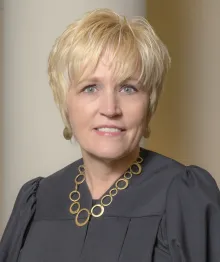
Chief Justice Susan Larson Christensen
Iowa Supreme Court
Treatment courts making a difference in local communities
Another area of strong consensus is the value of treatment courts and other problem-solving approaches. Chief justices consistently point to these programs as among the most effective tools for addressing underlying issues such as substance use and mental health disorders. Rather than relying solely on traditional punitive models, treatment courts combine accountability with structured support, supervision, and access to services. Leaders highlight the long-term benefits, including reduced recidivism, improved outcomes for participants, and cost savings for the broader system. These courts embody a more holistic vision of justice — one that recognizes the root causes of behavior and seeks to promote lasting change.
The statistics are a clear indication that these courts are breaking the cycle of addiction and crime. Treatment courts also deliver significant cost savings ...
Chief Justice Steven L. Jensen
South Dakota Supreme Court
AI & cybersecurity are key priorities
Technology modernization is also front and center in judicial priorities. Courts across the country are continuing to expand electronic filing systems, digitize records, and upgrade case management platforms. These efforts are not only seen as efficiencies but are essential steps toward improving access to justice. At the same time, chief justices are increasingly focused on cybersecurity risks. As courts rely more heavily on digital infrastructure, they are also becoming targets for cyber threats. Leaders report significant volumes of attempted intrusions and emphasize the need for robust defenses to protect sensitive data and maintain public confidence. Additionally, many are beginning to grapple with the implications of emerging technologies such as artificial intelligence, recognizing both their potential benefits and the risks they may pose to fairness, accuracy, and transparency.
In just the first nine months of 2025, those systems blocked more than 1.79 million phishing attempts targeting court employees and over 7.3 million malicious attempts to access court-managed websites. These are not abstract threats — they are daily reminders that safeguarding the justice system requires constant vigilance.
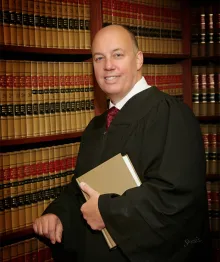
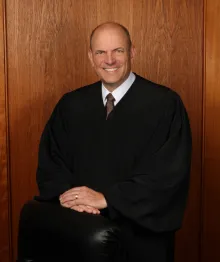
Chief Justice G. Richard Bevan
Idaho Supreme Court
Strategies to rebuild public trust
Concerns about public trust and institutional legitimacy run through nearly every address we reviewed. Chief justices acknowledge that confidence in the judiciary — and in government more broadly — has declined in recent years. They describe this erosion as gradual but consequential, shaped by a range of factors including misinformation, polarization, and negative perceptions of the legal system. In response, many are calling for renewed efforts in public outreach. They emphasize the importance of helping people understand how courts work, what judges do, and why judicial independence matters. Some also highlight the importance of ensuring that court users feel heard and respected, even when outcomes do not go in their favor.
Public trust in our justice system, and indeed in all governmental institutions, is rarely dismantled in one fell swoop. Rather, it erodes; a death by a thousand cuts. We all must guard against those cuts on a daily basis.
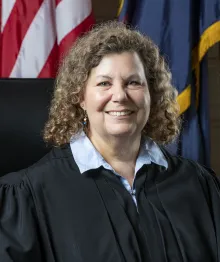
Chief Justice Valerie Stanfill
Maine Supreme Court
Taken together, these themes reflect a judiciary that is both under strain and actively adapting. Chief justices are candid about the challenges they face, from workforce shortages to declining trust, but they are equally focused on solutions. Whether through innovation, outreach, or structural reform, they are working to ensure that courts remain resilient and responsive. Their collective message is clear: maintaining a strong, independent, and effective judiciary requires ongoing effort, investment, and public engagement.
Explore more
Meeting operational demands in a changing environment
Rising workload pressures and the promise of AI are among the themes outlined in the 2026 Survey of State Courts Report. Based on research conducted by the TRI/NCSC AI Consortium for Policy & Law, the report highlights areas to watch for in state court staffing, operations, and technology.
The role of state courts in furthering access to justice
Our work is critical in assisting courts and their partners to be more community-connected, user-friendly, accessible, and welcoming for all people facing legal issues. Access to justice requires creativity, collaboration, and connection, and we work alongside courts in pursuit of this goal.
Implementation in action: Advancing state court behavioral health strategies
The National Council of State Court Behavioral Health Administrators brought together state court behavioral health leaders to share emerging practices, address system challenges, and advance effective responses at the intersection of behavioral health and state courts on Aug. 4-5 in Indianapolis.