

Resources for courts
Evidence-based court resources to help solve your toughest judicial challenges. Explore our tools and insights.

Popular resources

2025 State of the State Courts
Each year, we survey the public to assess confidence in state courts, emerging trends, and opportunities for judicial innovation.
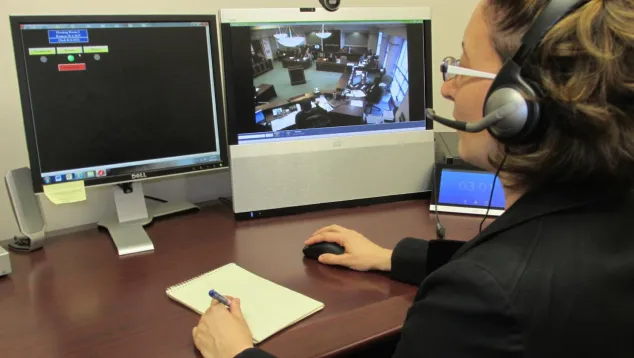
Language access & state court interpreters
As the developer of national court interpreter examinations, we can help you get started with language access services.

Caseload data
Sourced directly from state courts, our caseload data helps court systems anticipate and adapt to changing patterns in communities. Monitor trends and see how states compare with similar states and national trends.
Can't find what you're looking for?
The NCSC Resource Library is a searchable collection of research, publications and tools for the court community.


Browse our topics
Discover a wide range of expert resources for court professionals. Each topic offers insights, best practices, and innovative solutions to elevate your court.
What type of resource are you looking for?
Additional resources
AI-generated evidence: A guide for judges
Helping judges evaluate AI-generated content and ensure fair, informed decisions that preserve the integrity of judicial proceedings.
CORA for higher education
Court Opportunity Recruitment for All (CORA) helps connect students and recent graduates with court internship and law clerk opportunities at the state and local level.
CORA for courts
A centralized portal showcasing nationwide opportunities, Court Opportunity Recruitment for All (CORA) can provide your court system with a broader and more diverse pool of applicants.
Data elements for guardianship & conservatorship monitoring
Improving data collection for guardianship and conservatorship cases can assist courts in monitoring both their own performance and the performance of guardians and conservators, ultimately aiming to protect vulnerable individuals.
CORA court opportunities
View our interactive map and access Court Opportunity Recruitment for All (CORA), the only national state court clerkship clearinghouse with opportunities across the country.
State-by-state tracking of judicial salaries
Published for over 50 years, the Survey of Judicial Salaries serves as the primary record of compensation for state judicial officers and state court administrators.
Our centers & projects
Learn more about our projects focused on AI, jury studies, court data, and community-focused initiatives.
Put our skills to work
Want to talk to one of our NCSC experts in court administration? Contact us to learn how we can help your court.