

Meeting operational demands in a changing environment
Rising workload pressures and the promise of AI are among the themes outlined in the 2026 Survey of State Courts Report. Based on research conducted by the TRI/NCSC AI Consortium for Policy & Law, the report highlights areas to watch for in state court staffing, operations, and technology.
Handling complex work with constrained resources
While overall caseloads remain below pre-pandemic levels, half of the surveyed court professionals report increasing caseloads, growing case complexity, and persistent backlogs. Staffing shortages — particularly among clerks and clerk staff — continue to strain court operations, making workflow improvements more critical than ever.

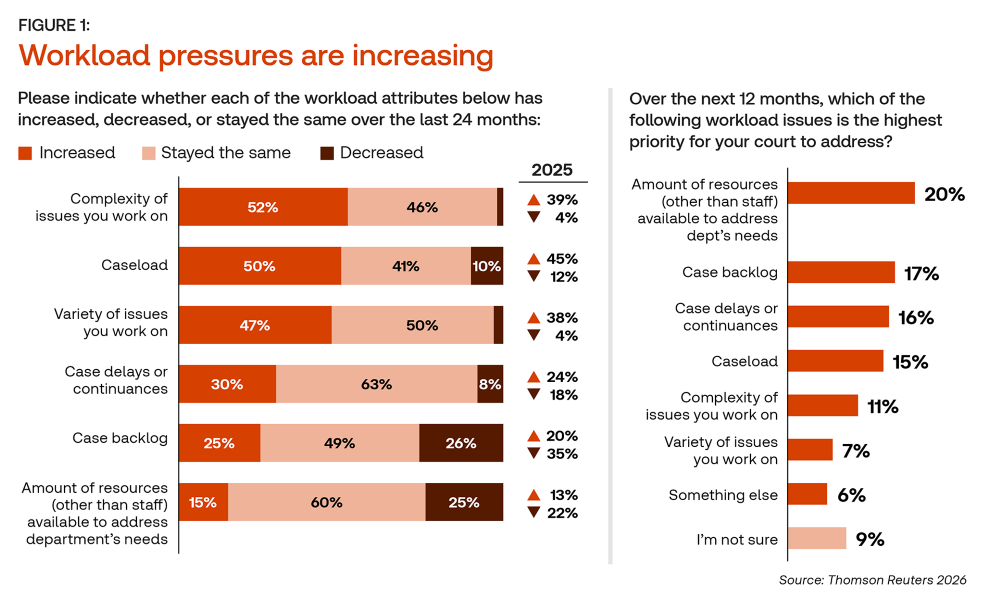
Courts are also dealing with fewer resources, with 25% of respondents stating non-staff resources have decreased in the last 24 months, while only 15% saw increases. Other factors impacting workloads include caseflow inefficiencies and stressors such as answering questions from court users, data entry and updates to the court management system.


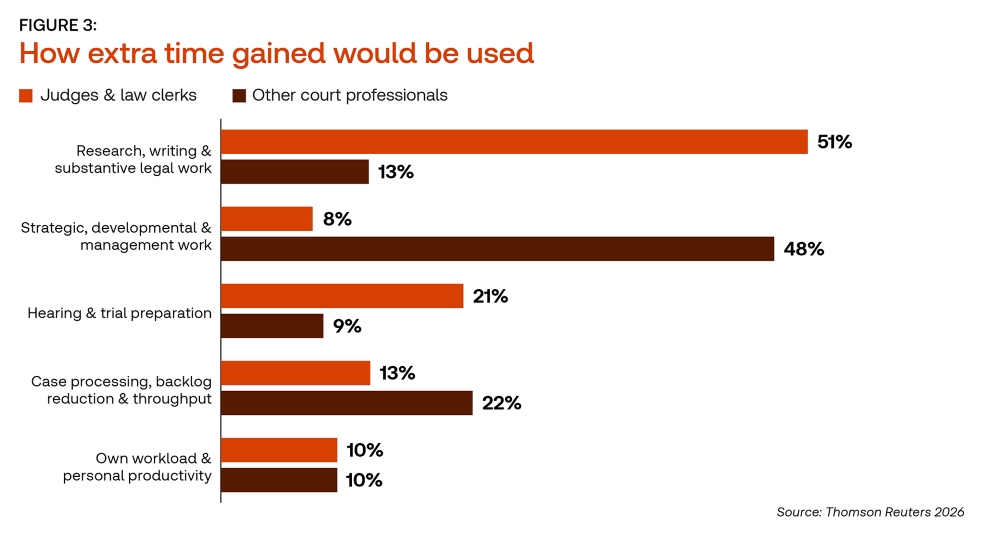
Automating inefficient, repetitive, or manual tasks can improve handling of cases and free up more time for administrative and higher-value tasks like research, writing, and substantive legal work.

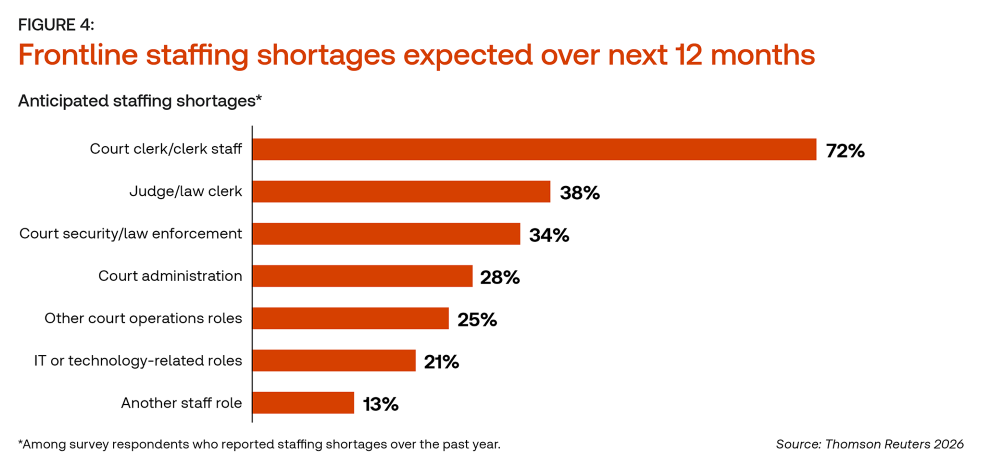
Additionally, more than half of survey respondents said they experienced staffing shortages in the past 12 months. Court clerks and clerk staff are the positions expected to see continued shortages.

Understanding AI's potential, opportunities & concerns
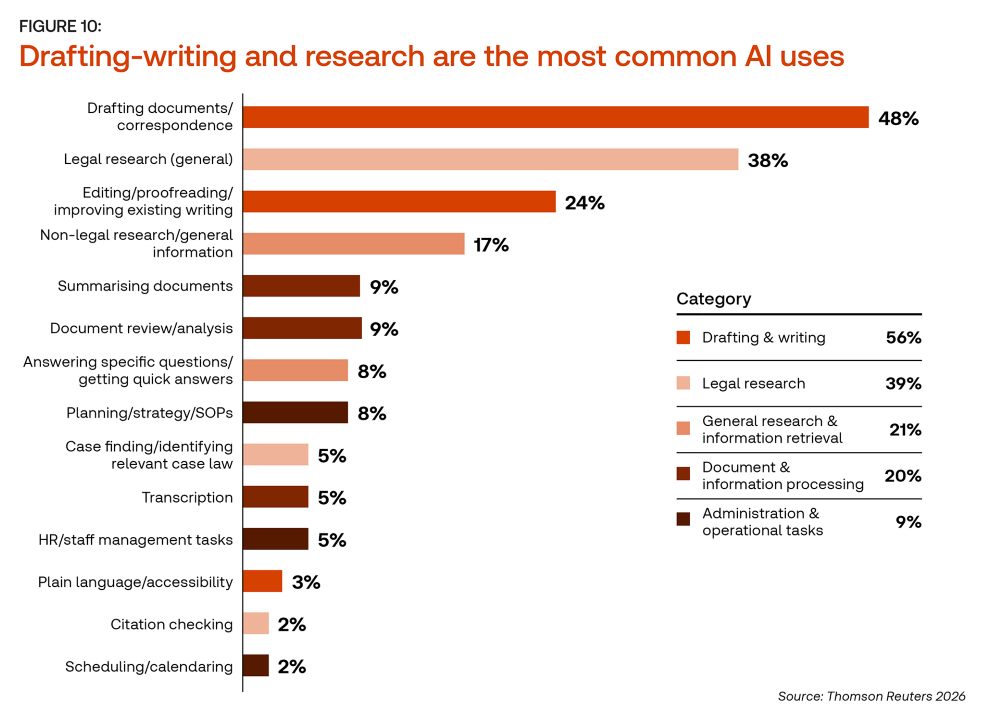
Judges and court staff are already using AI primarily for drafting, editing, and research. Survey respondents expect AI to save an average of nine hours per week within five years, allowing more time for substantive legal work, strategic planning, and improving case processing rather than replacing judicial or staff expertise.

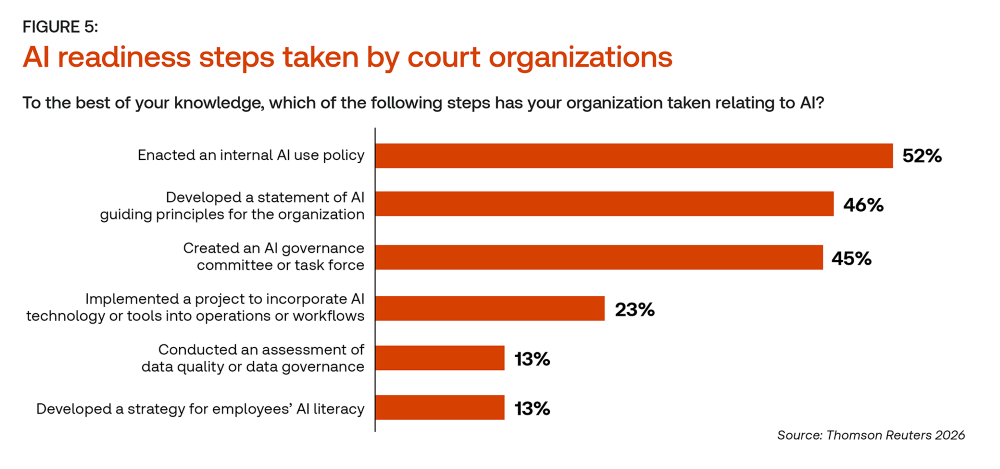

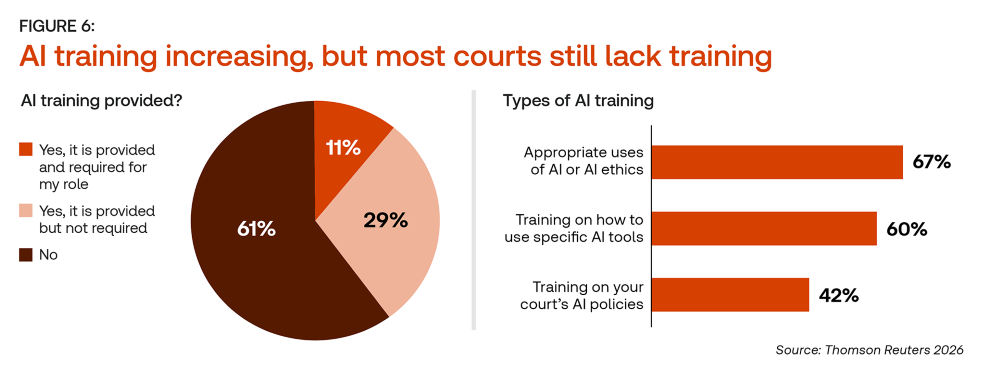
Court professionals are most concerned about overreliance on AI leading to erosion of professional skills, along with AI-generated fake evidence, fabricated court documents, and hallucinations. However, respondents also recognized potential opportunities for workflow time savings using AI to assist with certain tasks.

Exploring post-pandemic virtual & remote hearings
The survey also addressed the use of virtual and remote hearings, with about half or more of respondents saying their courts use virtual hearings in criminal and/or civil cases for administrative, scheduling, or status hearings as well as preliminary, evidentiary, or motion hearings. More than one-quarter use virtual hearings for juvenile cases. Many believe virtual hearings improve access to justice and court participation.

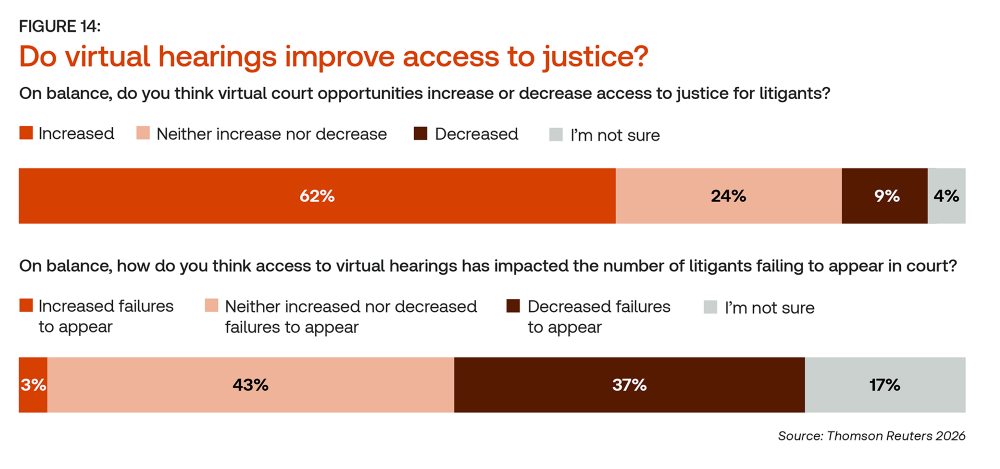
While virtual & remote hearings have reduced barriers such as time off work, transportation issues, and child care, challenges remain for both litigants and the courts. Litigant challenges include a lack of strong technology skills, less-than-ideal physical locations to remote in from, and a lack of access to a reliable connection and/or technology.
Survey findings showed that opportunities remain for greater adoption of public-serving tools, such as legal self-help portals, background checks, and online dispute resolution.
Moving forward
Many courts are facing operational challenges and transitions while also contemplating new opportunities presented by AI. The report offers some actionable steps to help ease staffing and resource constraints while expanding the use of technology.
- Redesign workflows to address gaps
- Identify workflow pain points first, then pursue an automated solution
- Evaluate the scope of AI maturity
- Design virtual hearings for fit, not coverage
Explore more
Preparing for future workforce needs
Emerging technologies — particularly artificial intelligence (AI) — offer new opportunities to ease court workloads and better serve the public.
Trends in state courts
NCSC's annual peer-reviewed report covers the latest advancements in state court administration.
NCSC’s national leadership on AI in the courts draws major media attention
As artificial intelligence rapidly reshapes industries, its implications for the administration of justice have moved from niche legal discussions into the national spotlight. Courts, policymakers, and the public are among those regularly turning to NCSC as the leading authority on how to responsibly evaluate, adopt, and govern AI in judicial settings.